Explore the fictional maintenance record
The context
Make inspection and follow-up distinct.
The earlier presentation shared too much of the agency site’s visual language. A complete reset needed to give PageVital its own working identity across the public journey and application, while preserving what each observation can establish.
- Put a public-page URL input at the opening and explain its coverage.
- Give recurring care a chronological record of observations, attention and rechecks.
- Explain selected-URL capacity before subscription and keep missing evidence distinct from recovery.
The engagement
What we took on.
Product ownership: PageVital is a Modern Labyrinth-owned product. This case study describes a complete interface reset and its public fictional walkthrough, not a client engagement, customer repair or proven paid monitoring performance.
From scope to implementation
How the work came together.
-
Make the first task immediate
A contained public-page checker leads the homepage. Agency-care context, coverage and a separate fictional record explain what the tool takes as input and what its evidence can support.
-
Reset the complete product direction
A PageVital-owned visual system replaces the inherited agency presentation across public pages, account entry, reports and workspaces. Each destination keeps its task: inspect, compare capacity, enter an account or investigate a finding.
-
Put evidence before reassurance
Reports bring findings, missing measurements and next actions ahead of scores. The care record separates review from correction and preserves the last reliable observation when a recheck cannot finish.
A closer look
The workflow, shown in context.
Actual product screens using fictional examples. Open any image to inspect the original capture.
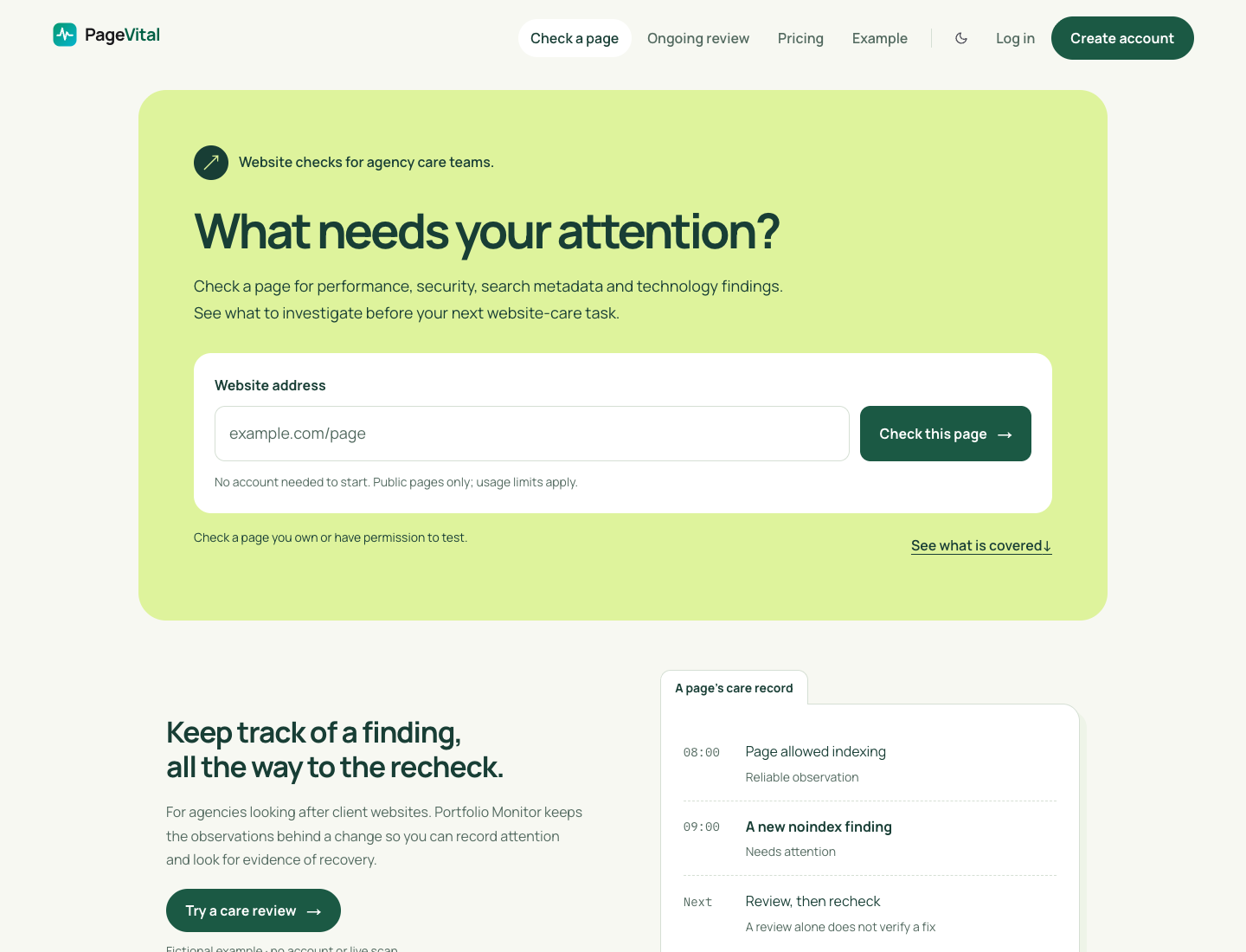
Begin with the page to inspect
The opening is a contained URL inspection tool. A separate care-record preview introduces ongoing agency review without embedding the full walkthrough.
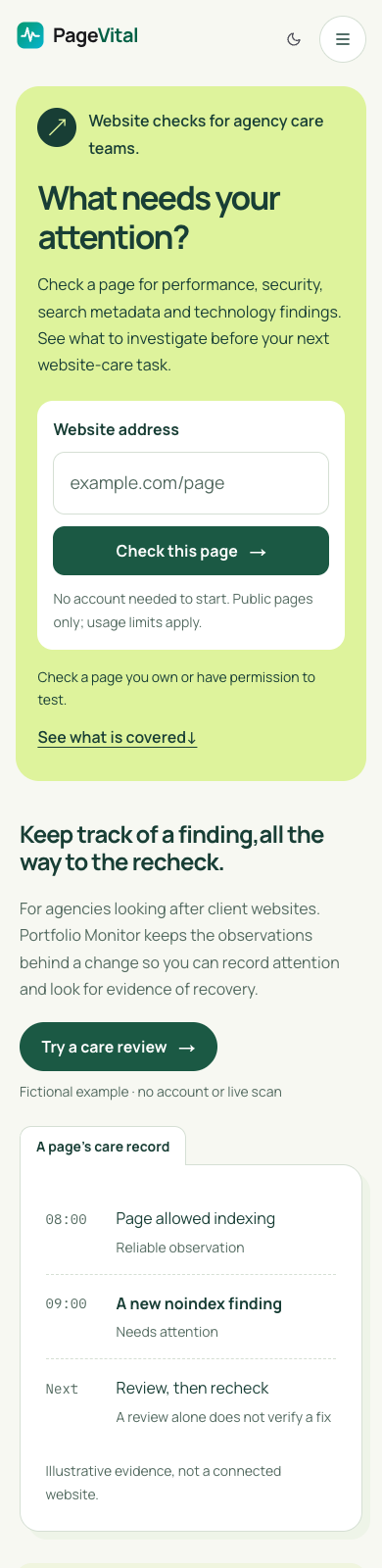
Actual PageVital homepage, October 12, 2026. The care-record preview is fictional and labeled in the interface.
A failed recheck keeps the finding open
The chronological record adds an incomplete attempt while retaining the last reliable observation. Only fresh, comparable fictional evidence establishes recovery of the displayed finding.
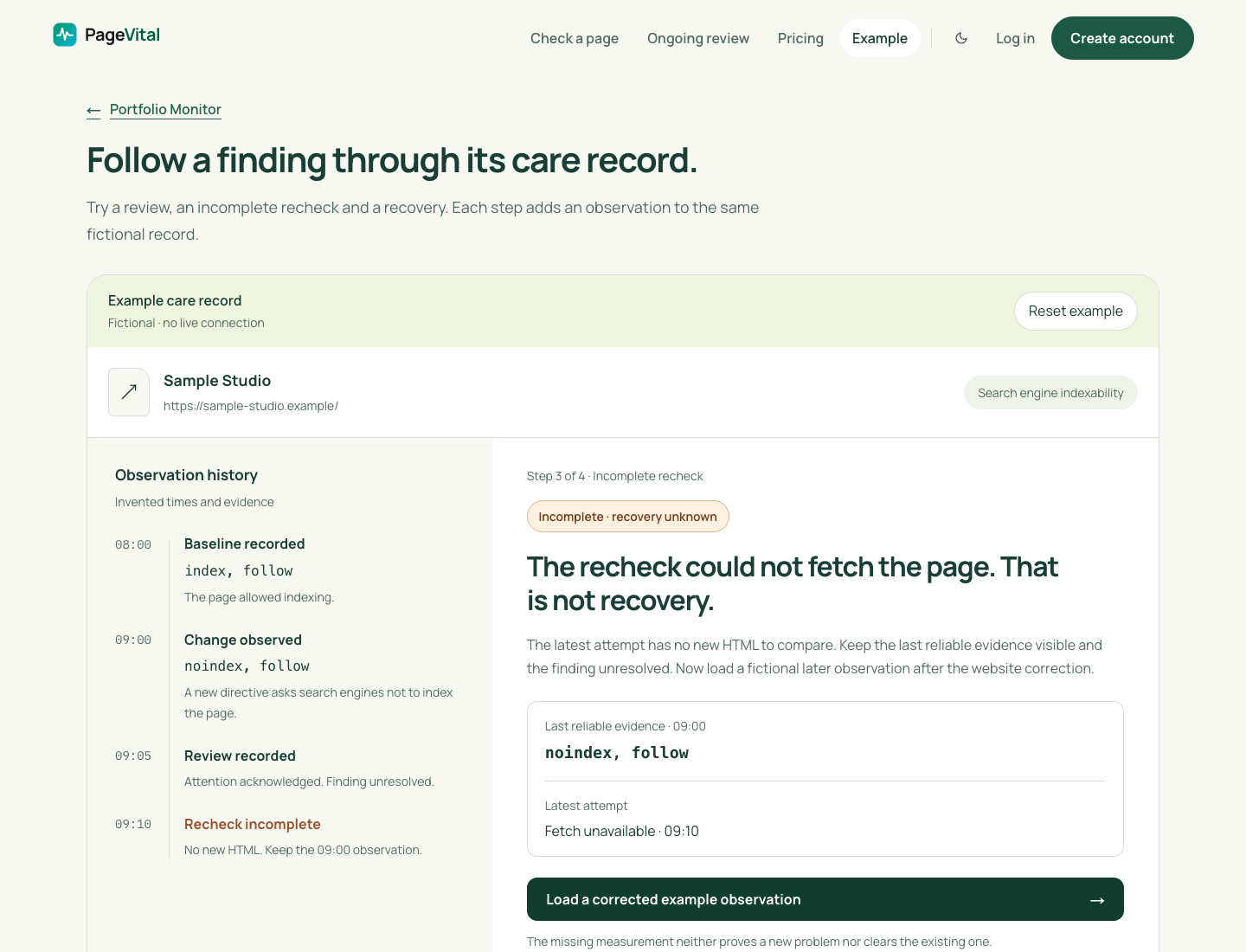
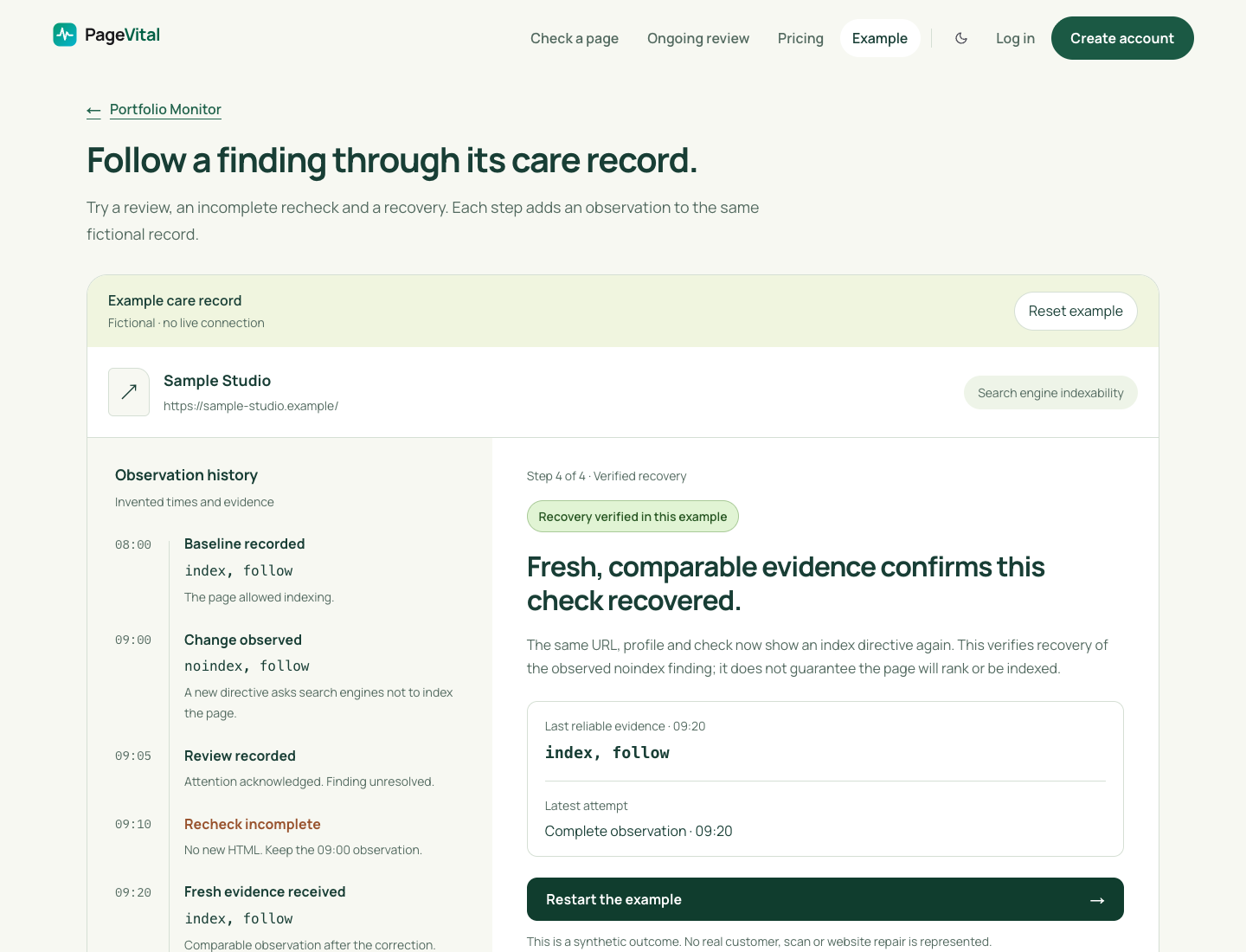
Actual PageVital interface with invented times and results, October 12, 2026. These controls do not scan a site or save changes.
Read the record before the next action
Observation history and the current decision form one care record. On mobile, the finding and last reliable evidence lead into the review control; the chronological history follows below.
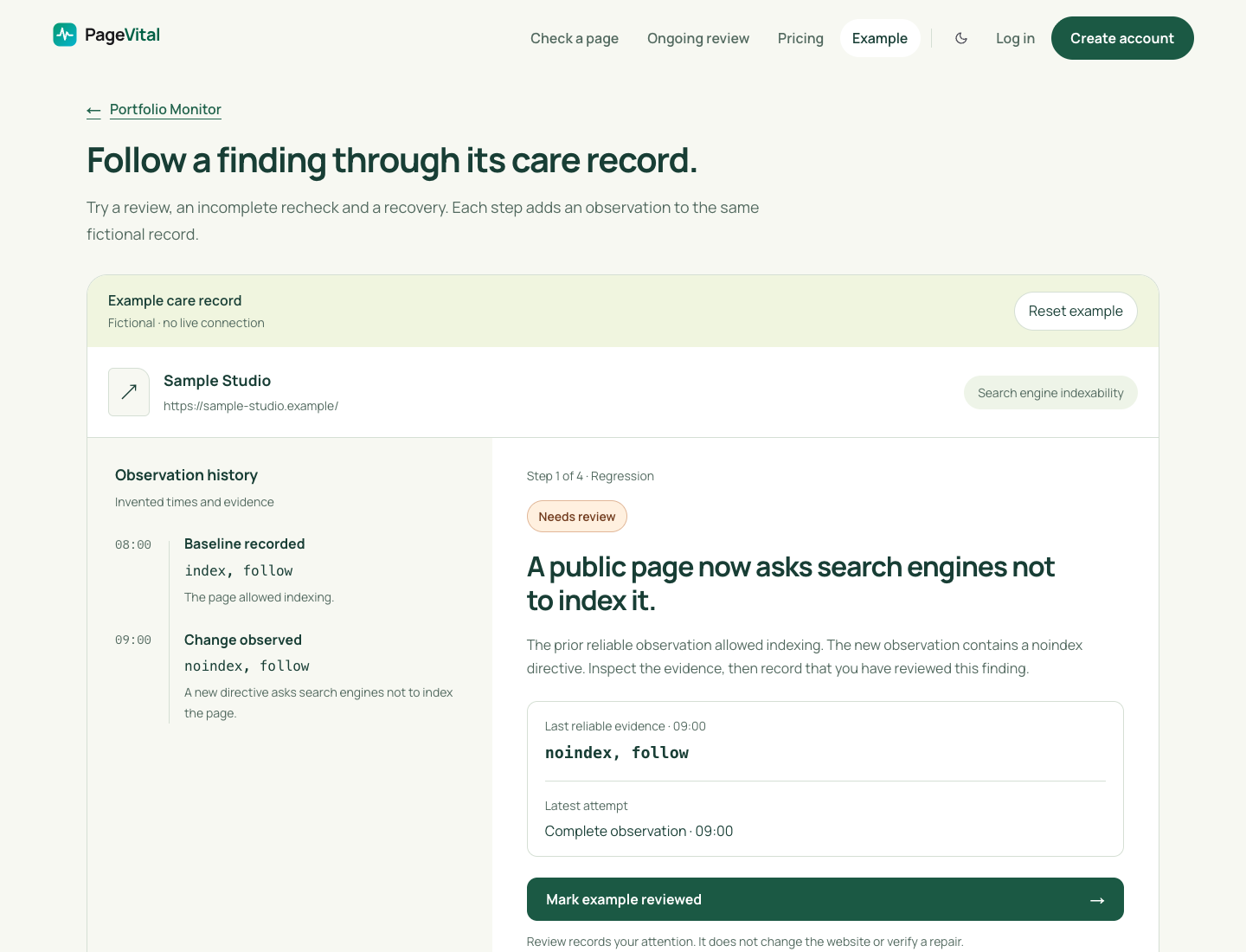
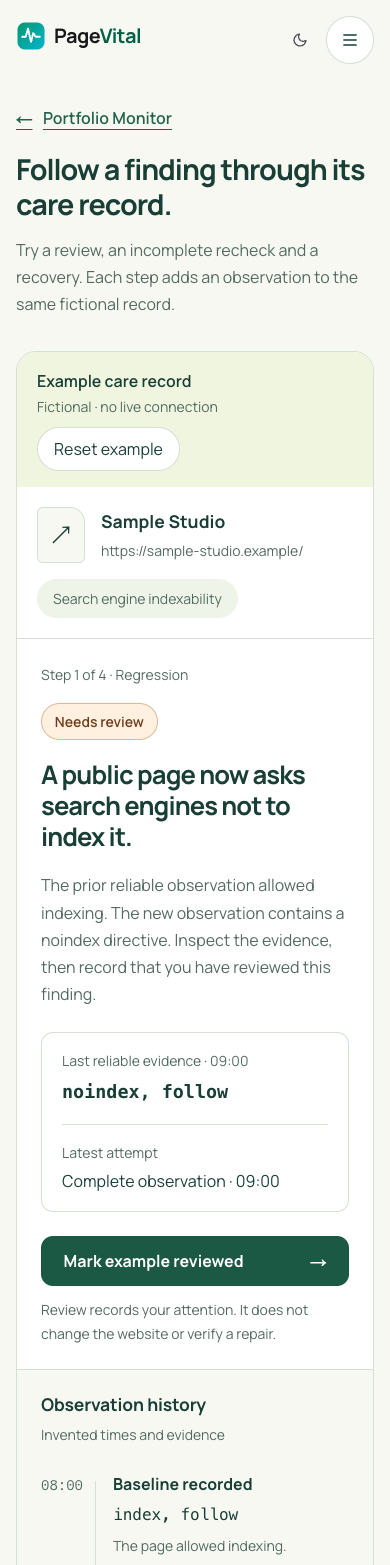
Actual interface with a fictional example, October 12, 2026.
The delivery
A distinct product direction, with bounded proof
The reset gives immediate checking and ongoing care different working surfaces. Public screens show the inspection tool and fictional care record; account, report and workspace presentation was also checked locally with synthetic fixtures.
- The homepage begins with a URL input; one dedicated chronological example explains review, incomplete rechecks and fictional recovery.
- Desktop, mobile, enlarged-text and fictional result states were checked. Synthetic application fixtures do not establish real account or provider behavior.
- Customer adoption, conversion impact, scheduled monitoring and alert delivery remain outside this case study’s evidence.
What connects the work
The takeaway.
Website-care decisions need clear scope and reliable evidence: attention is recorded separately from a correction, and a missing observation cannot prove recovery.
Explore more work